




How To Pick The Best Volkswagen Cars
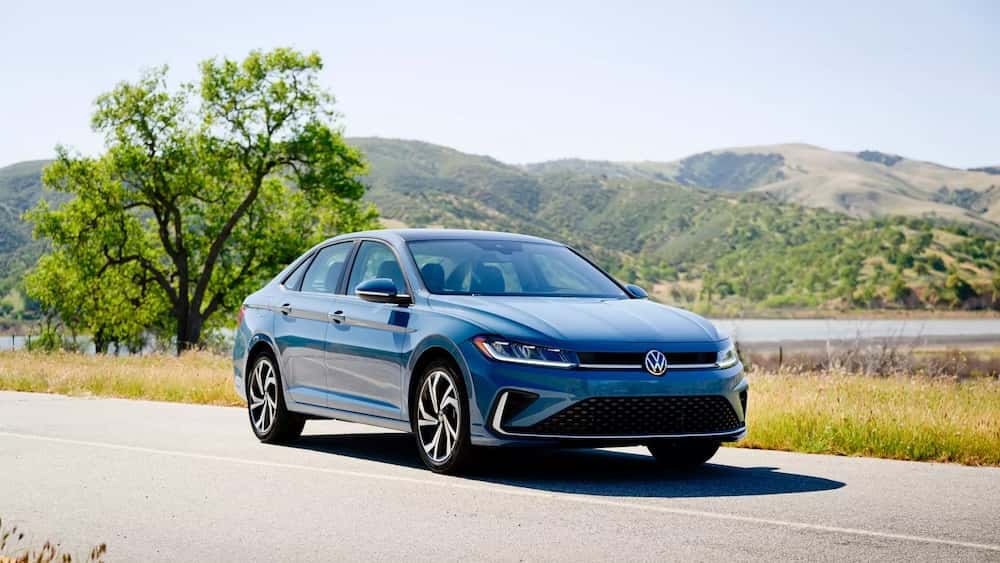
Photo Source/Copyright: Volkswagen
Are Volkswagen cars dependable enough for long-term ownership? Yes, Volkswagen builds durable, well-engineered vehicles, and with consistent maintenance, many owners reach high mileage without major trouble. Independent ratings place the brand near the middle of the pack rather than at the top, and reliability varies meaningfully by model. Among the best Volkswagen cars for long-term dependability, the Jetta, Tiguan, Atlas, Taos, and Atlas Cross Sport stand out for different reasons.
Are Volkswagen Cars Reliable?
Volkswagen’s reputation rests on long production runs and platforms that stay in service for years, giving engineers time to resolve weaknesses. RepairPal rates the brand 3.5 out of 5.0, placing it twelfth among thirty-two automakers.
This score reflects solid baseline engineering, but model selection matters far more with Volkswagen than with brands rated uniformly across their entire lineups, making careful vehicle evaluation essential for buyers.
How Long Do Volkswagen Cars Last?
Vehicles across every brand last longer than they once did. Longevity researchers at iSeeCars now measure durability against a 250,000-mile benchmark rather than the 200,000-mile standard previously used.
Two Volkswagen vehicles, the Golf and the Jetta, showed above-average durability in that analysis. What determines whether any Volkswagen reaches those numbers is service history, rather than the badge. Owners who follow the maintenance schedule without delay see dramatically better outcomes than those who don’t.
What Makes Volkswagen Vehicles Reliable?
Volkswagen’s approach favors refinement over reinvention. Rather than replacing major components each generation, engineers address known weaknesses and carry forward the improved hardware. That philosophy shows up in several places across the lineup and explains much of the brand’s durability and its performance.
- Iterative engineering: Volkswagen refines proven hardware rather than replacing it; the Taos 1.5-liter TSI received revised piston rings, revised fuel injectors, and a modified turbo housing in its most recent update.
- Shared platforms and powertrains: Common architecture across the lineup means high production volume, a mature parts supply, and well-documented service procedures.
- Standard driver assistance: IQ.DRIVE is standard on the Jetta, Taos, Tiguan, Atlas, and Atlas Cross Sport, reducing the hard-braking and hard-acceleration events that accelerate mechanical wear.
- Structural safety design: The Atlas and Atlas Cross Sport pair standard LED headlights rated good, with a standard front crash prevention system rated acceptable for pedestrian detection.
Most Reliable Volkswagen Models
Reliability data and ownership costs consistently point to five vehicles. These are the best Volkswagen cars for buyers who intend to keep a vehicle well past the warranty period, ranked by the strength of the evidence supporting each one.
- Volkswagen Jetta → The lineup’s strongest independent scorer, rated 4.0 out of 5.0 by RepairPal with repairs both less frequent and less severe than the average car, plus 40 miles per gallon (MPG) highway. Best for commuters, students, and first-time buyers.
- Volkswagen Tiguan → A mature 2.0-liter turbocharged platform in a five-passenger package offering 69.8 cubic feet of maximum cargo room with IQ.DRIVE standard. Best for small families and weekend drivers.
- Volkswagen Atlas → The seven-passenger three-row option, with a 269-horsepower Evo4 engine, standard IQ.DRIVE, standard Intelligent Crash Response System, and three-time IIHS TOP SAFETY PICK+ recognition since its redesign. Best for large families needing a third row.
- Volkswagen Taos → A recently refreshed 1.5-liter TSI with hardware-level durability updates, an eight-speed automatic, and up to 36 MPG highway. Best for city driving and budget-conscious buyers.
- Volkswagen Atlas Cross Sport → The same TOP SAFETY PICK+ engineering and 269-horsepower powertrain as the Atlas, reconfigured as a two-row five-seater with 40.3 cubic feet behind the rear seats and 40.4 inches of second-row legroom. Best for buyers who want Atlas safety and cargo room without a third row.
Common Volkswagen Reliability Concerns
Evaluating brand reliability requires acknowledging notable performance gaps. In J.D. Power’s most recent U.S. Vehicle Dependability Study, Volkswagen ranked last among 28 brands, recording 301 problems per 100 vehicles, compared with a study average of 204.
However, model-level variance explains this discrepancy: while the Jetta earns a strong 4.0 out of 5.0 rating from RepairPal, the Tiguan sits at 3.0 out of 5.0, ranking last in its compact-SUV segment with higher repair frequencies. In other words, turbocharged powertrains and European components reward disciplined maintenance while punishing postponed service.
Volkswagen Maintenance and Ownership Costs
RepairPal puts average annual repair and maintenance spending across all Volkswagen models at $676, compared with $652 across all vehicles; a modest premium, not a luxury-brand penalty. Individual models differ: the Jetta averages $609 and the Tiguan $730.
Every new Volkswagen also includes two years of Carefree Maintenance covering the first two scheduled services, with service recommended every 10,000 miles or twelve months, alongside a four-year, 50,000-mile New Vehicle Limited Warranty.
Volkswagen Safety Features
Driver assistance technology contributes directly to long-term reliability by smoothing the inputs that wear components down. Volkswagen makes its core safety suite standard across the mainstream lineup rather than optional, so buyers aren’t forced to choose between protection and price at the entry trim level.
- IQ.DRIVE: Standard across the Jetta, Taos, Tiguan, Atlas, and Atlas Cross Sport, drawing on front and rear radar, a front camera, and multiple ultrasound sensors.
- Travel Assist: Hands-on semi-automated highway support with lane centering, cutting driver fatigue on long stretches.
- Intelligent Crash Response System: Standard on the Atlas; after a collision, it shuts off the fuel pump, unlocks the doors, and activates the hazard lights.
Which Volkswagen Is Right for You?
Match the vehicle to the use case. Commuters gain the most from the Jetta, small families from the Tiguan, and households needing a third row from the Atlas. City drivers on tighter budgets should look at the Taos, while the Atlas Cross Sport delivers Atlas engineering in a five-seat body. The best Volkswagen cars reward owners who stay current on service; buyers unwilling to do that should shop elsewhere.
Ready to compare the best Volkswagen cars in person? Our team can walk you through the lineup, arrange test drives, and answer questions about maintenance coverage. Browse our current inventory or stop by to get started.
More from Volkswagen Brandon
Top Reasons to Drive a VW EV
Photo Credit: Volkswagen Thinking about making the jump to an EV in the area? You aren’t alone. With gas prices constantly fluctuating and daily commutes taking longer, more drivers are taking a serious look at electric options. If you’ve been keeping an eye on VW electric vehicles, you already know the ID.4 is…
Experience The Fast Volkswagen Golf R Today
Photo Source/Copyright: VOLKSWAGEN Volkswagen Golf R: Pure Hatchback Thrills Finding a daily driver that can handle morning traffic while secretly being ready for a weekend track day isn’t easy. That is exactly why enthusiast drivers keep returning to the VW Golf R. If you are looking to feel the impressive HP Golf R models…
Why The Volkswagen Tiguan Crossover Fits Everyone
Photo Credit: Volkswagen Finding an SUV that feels composed on the road, fits all your daily gear, and doesn’t look like every other practical box in the neighborhood isn’t always easy. The Volkswagen Tiguan crossover hits a sweet spot for drivers who want European driving dynamics alongside real-world functionality. It handles suburban errands and highway…